A door of your own.
For up to two years.
After emergency shelter, most survivors aren't ready for the open rental market — landlords, deposits, credit checks, and a partner who may still be searching. Our 18 transitional apartments give you up to 24 months of low-cost, confidential housing while you rebuild income, repair credit, and put real distance between you and the past.
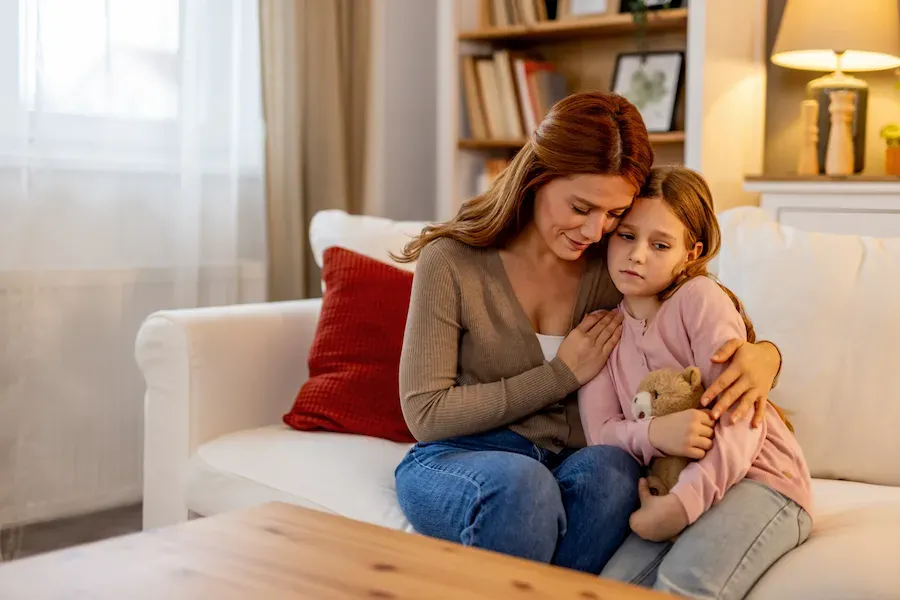
Real apartments. Real keys. Real privacy.
What you get
Each apartment is a private, fully-furnished one- or two-bedroom unit at one of our two confidential addresses. You have your own key, your own kitchen, your own everything. Children attend their normal schools or are enrolled in nearby ones with our help.
- Furnished apartment — bed, sofa, table, kitchenware, linens. Move in with what's in your bag.
- Utilities included — heat, water, electric, internet. No setup fees, no surprise bills.
- On-site case manager — weekly check-ins to help with jobs, benefits, court, healthcare, schools.
- Childcare assistance — sliding-scale daycare partnerships and after-school programs nearby.
- Confidential location — addresses are not public. Mail is screened. Visitors must be approved.
- Move-out support — first/last/security on a market apartment, donated furniture, and 12 months of post-housing case management.
What it isn't
Transitional housing isn't shelter — it's the bridge between shelter and your own apartment in the open market. We're upfront about what's expected and what isn't, so you know what you're walking into.
- Not a shelter. No curfew, no shared bedrooms, no required programming.
- Not free. Rent is 30% of your income, capped low. Most residents pay $50–$300/month.
- Not permanent. Maximum 24 months. The goal is moving on with savings, credit, and stability.
- Not surveillance. We don't drug-test, we don't search apartments, we don't penalize for having visitors.
- Not religious. No services, no meetings, no expectations around belief.
- Not required. Nothing is — you opt in to case management, classes, and groups as it helps you.
Three configurations.
Placement is based on family size and current openings. We try to match within two weeks of acceptance — sometimes sooner.

Studio
For single survivors without children at home. Compact, private, fully furnished. Six units across both buildings.
One-bedroom
For survivors with one or two younger children. Separate sleeping areas, full kitchen, eat-in dining. Eight units total.

Two-bedroom
For larger families or survivors with older or mixed-age children. Two private bedrooms, shared living and kitchen. Four units total.
A roadmap, not a script.
Most residents move along this arc, but you set the pace. Some are ready to move out at 9 months; some need the full 24. Both are fine.
Land
Move in, rest, get the kids enrolled. Connect with case manager, finish ID and benefits paperwork, breathe. No big decisions yet.
Stabilize
Job, school, or training. Healthcare. Counseling if you want it. Court accompaniment for any pending custody or protective-order work.
Build
Save aggressively (your low rent is for this). Repair credit. Open a bank account in your name only. Plan your move-out.
Launch
Apartment search with our housing advocate. We help with deposits, donated furniture, and 12 months of follow-up after you leave.
Who can apply?
The program is designed for survivors of intimate-partner violence who are coming out of crisis and ready for the next stable step. We try to keep eligibility simple. If you're close on any criterion, call us — we may still be able to help, or refer you to a partner program.
- You are a survivor of domestic violence Self-identified. We don't require police reports, court documents, or proof.
- You are ready to live independently Cooking, parenting, basic self-care. We're not a treatment facility, though we can connect you to one.
- Income at or below 80% of area median Or zero income. We'll help you build it. We do not exclude based on prior eviction or credit history.
- Sober or in active recovery We don't drug-test. We do ask that you're not actively using in ways that endanger your kids or other residents.
- You can come and go safely Our addresses are confidential — entering this program means agreeing not to share the location, even with family.
Apply, and we'll meet you where you are.
Applications are reviewed on a rolling basis by our housing advocates — typically within 5 business days. There's no application fee. We will not share your information with anyone, including the other parent.